
The Red Courtyard

The Red Courtyard was built in the 2nd century CE during the Roman Empire period in the lower city of the ancient city of Pergamon. This monumental structure, dating to the reign of Emperor Hadrian, derives its name from the red bricks used in its construction. The Red Courtyard, approximately 266 meters in length, is […]
Temple of Trajan
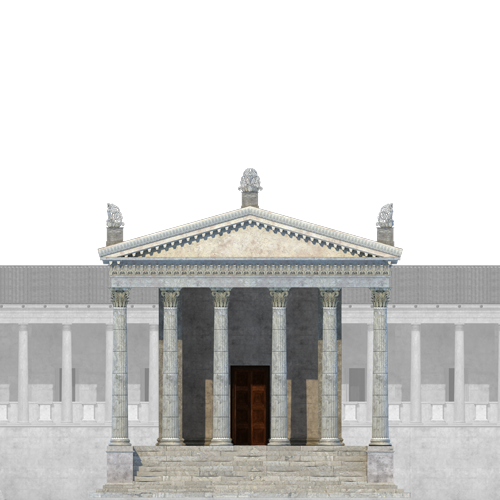
The Temple of Trajan in Pergamon was dedicated to Trajan (98–117 CE), the second of the five best emperors of the Roman Empire. A typical example of Roman temple architecture, the structure was built in the upper city of Pergamon, right next to the Athena Sacred Area and at the highest point above the ancient […]
Gymnasion Complex
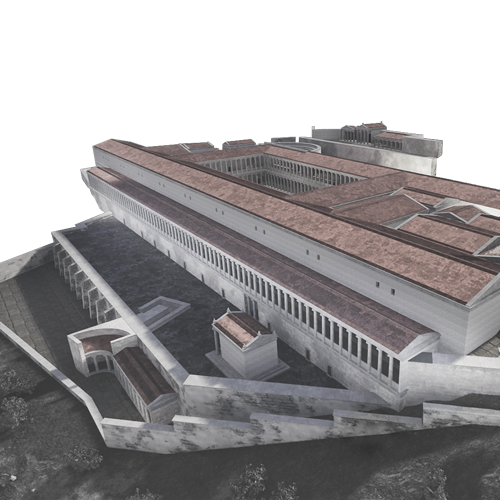
Built during the 3rd century BCE in the period of the Pergamon Kingdom, the Pergamon Gymnasion Complex is an important structure that reflects the educational and athletic practices of the ancient world. Skillfully designed to take advantage of the terrain’s natural slope, this complex consists of upper, middle, and lower terraces arranged stepwise from bottom […]
Temple of Dionysos
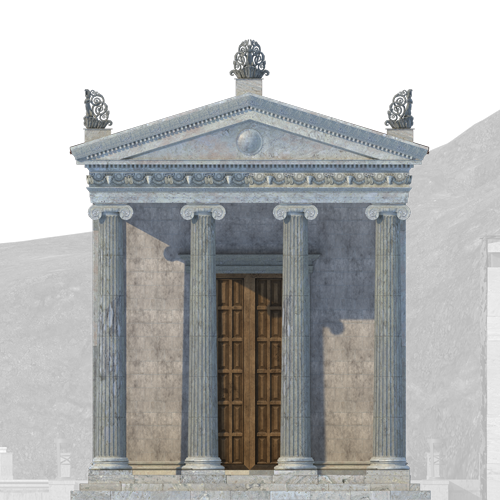
Dionysos, known as the god of wine, harvest, and theater, held a special place in the hearts of both the people and the ruling elite. This deep devotion materialized in Pergamon with the construction of a magnificent temple dedicated to him. Although the exact date of the temple’s construction is unknown, it is dated to […]
The Athena Sacred Area
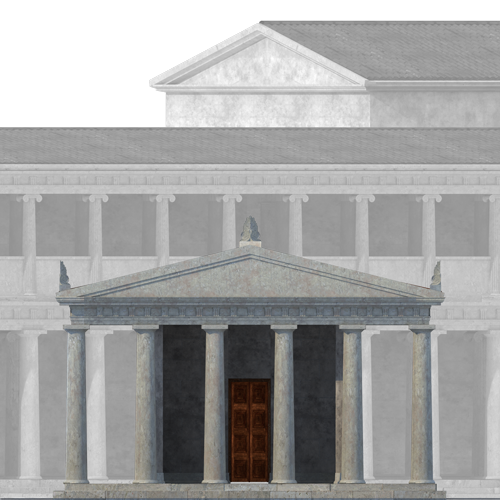
Built during the period of the Pergamon Kingdom (280–133 BCE), the Athena Sacred Area is located in the upper city of Pergamon, above the ancient theater, in a dominant position overlooking the city. Dedicated to the city’s protective goddess, Athena, this sacred area was arranged during the reign of Attalos I (241–197 BCE). Eumenes II […]
Arsenal
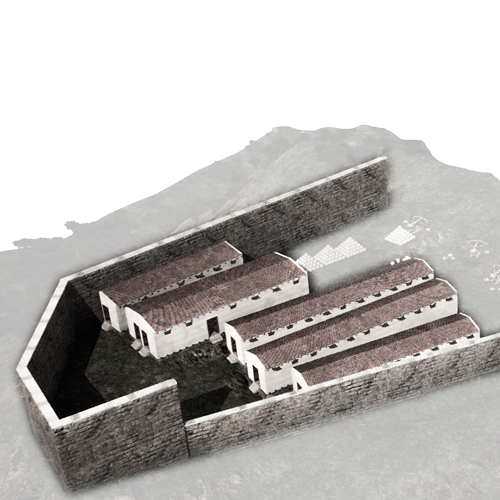
In 1937, Akos von Szalay and Erich Boehringer conducted detailed studies on Hellenistic-period arsenals in Pergamon. These studies were carried out in an area located just below the summit of the upper city, known as the “Queen’s Garden” (Garten der Königin) or “Royal Fortress” (Königsburg). Five long, narrow, and rectangular arsenals were identified within this […]
Ancient Theater Complex
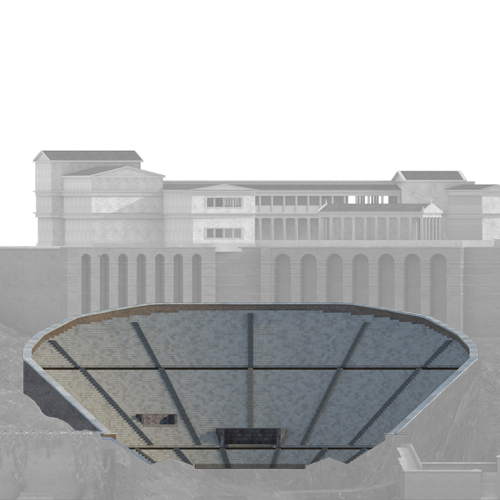
The theater complex, built perpendicularly on the western slope of the upper city, is one of the most significant structures shaping the silhouette of the ancient city. In addition to the theater building group, the complex also includes terraces set on different levels and structures, such as the Temple of Dionysos. The positioning of the […]
The Demeter Sacred Area
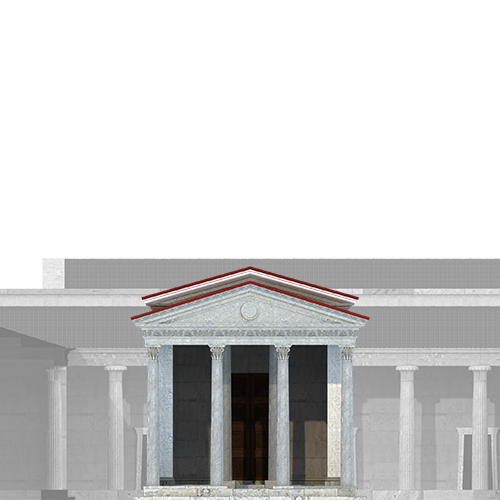
Amid the echoes of history within the stones of the ancient city of Pergamon, the Demeter Sacred Area stands as a tranquil corner preserving the profound silence of sacred rituals. This rectangular sacred area features a layout shaped by architectural elements such as a temple, a colonnaded gallery (stoa), an altar, and a monumental gate […]
The Altar of Zeus

Throughout history, monumental structures symbolizing the power of gods have been constructed. However, the Altar of Zeus in Pergamon is not merely a monumental structure but a true manifesto of power and grandeur. The identity of the Pergamon king who commissioned the altar, the date of its completion, and to whom it was dedicated remain […]
The Asklepion Sacred Area

In the 4th century BCE, just outside the lower city of Pergamon, known for its fertile lands and abundant water resources, the Asklepion Sacred Area was established. Dedicated to Asklepios, the god of health and medicine, this sacred area served as both a medical and religious center in antiquity. During the 2nd century CE, with […]